The Sound of Your Voice: Chris Heaphy
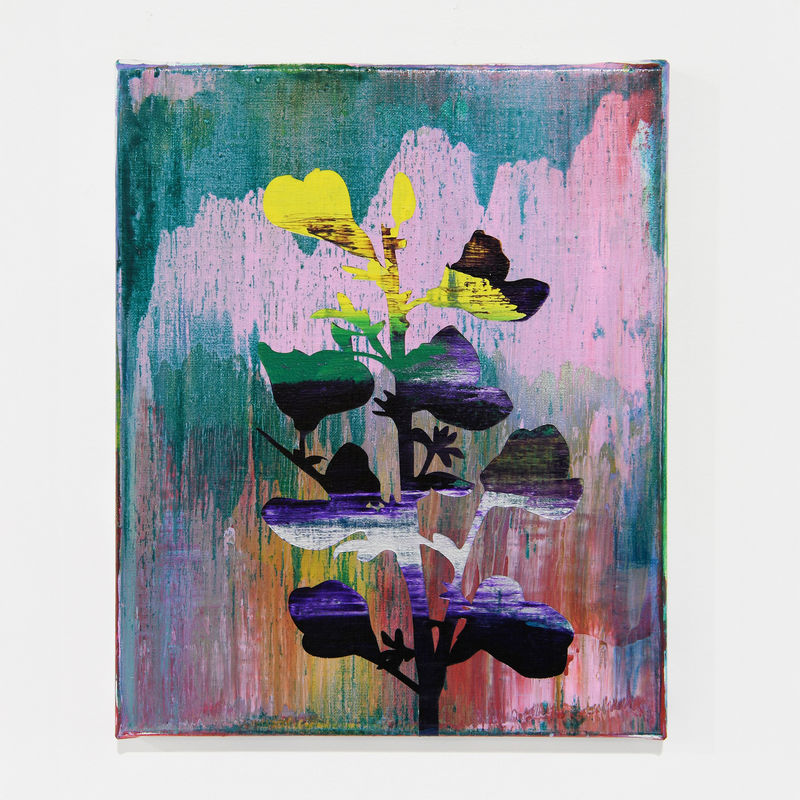
Drawing from personal observation, Heaphy is interested in how things exist together and side by side. In representing the natural world, he creates metaphors for how things coexist in culture and society.
Chris Heaphy’s latest exhibition The Sound of Your Voice develops an ongoing enquiry into identity through cultural exchange, amalgamation and juxtaposition. Underpinned by a deeply personal response to questions such as ‘who are we?’ and ‘what does it mean to live here in Aotearoa?’, Heaphy’s work maintains an openness, encouraging the viewer to engage with the exhibition through a lens of personal perception and experience. Employing the silhouette as a vessel to carry narrative, there is a directness to Heaphy’s visual language, while over time an unfolding or unveiling of complexities inherent to the enquiry appear.
-
 Chris Heaphy, This Will Always Be Remembered Until It's Not, 2026
 -
Chris Heaphy, And It Leads Back to the Start, 2026
-
Chris Heaphy, A Song From Memory, 2026
-
Chris Heaphy, Shine the Light into Your Eyes, 2026
-
Chris Heaphy, This is the Moment, 2026
-
Chris Heaphy, Said in Present Tense, 2026
-
Chris Heaphy, These Are the Days to Remember, 2026
-
Chris Heaphy, You of Grace, 2026
-
Chris Heaphy, I Can't Tell Where You End and I Begin, 2026
-
Chris Heaphy, Where is the Love Song to Set us Free, 2026
-
Chris Heaphy, Through Distance Now and Then, 2026
-
Chris Heaphy, There is Only You and Me in This Life, 2026
-
Chris Heaphy, Seems Like it Will Always Be So, 2026
-
Chris Heaphy, The Space Between Us, 2026
-
Chris Heaphy, This is the Silence Calling Out, 2026






“In between, there’s always a space of encounter and emergence, chaotic and uncertain – te ao hurihuri, for example, the spinning world between Māori and Pākehā, the life of the ancestors and contemporary experience. That’s a difficult, but fascinating realm to navigate.”
–Anne Salmond, ‘Preface,’ Knowledge Is a Blessing on Your Mind: Selected Writings, 1980–2020, Auckland University Press, 2023
Chris Heaphy’s latest exhibition The Sound of Your Voice develops an ongoing enquiry into identity through cultural exchange, amalgamation and juxtaposition. Underpinned by a deeply personal response to questions such as ‘who are we?’ and ‘what does it mean to live here in Aotearoa?’, Heaphy’s work maintains an openness, encouraging the viewer to engage with the exhibition through a lens of personal perception and experience. Employing the silhouette as a vessel to carry narrative, there is a directness to Heaphy’s visual language, while over time an unfolding or unveiling of complexities inherent to the enquiry appear.
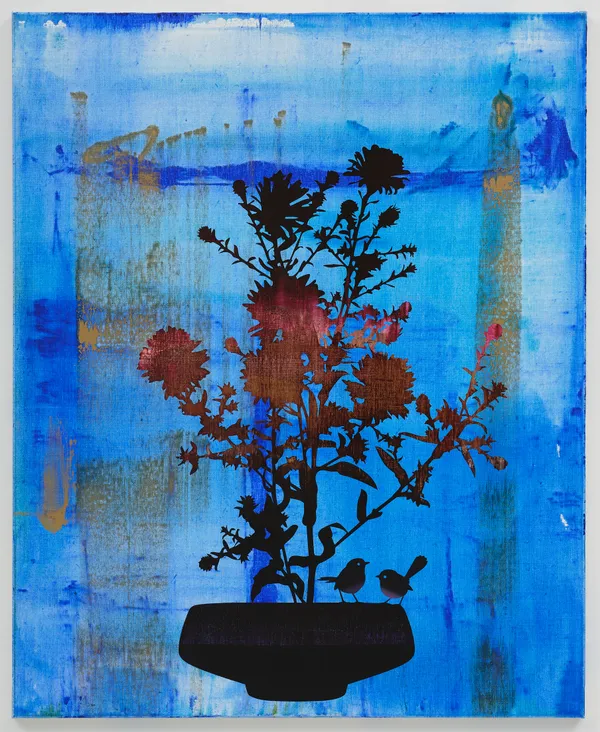
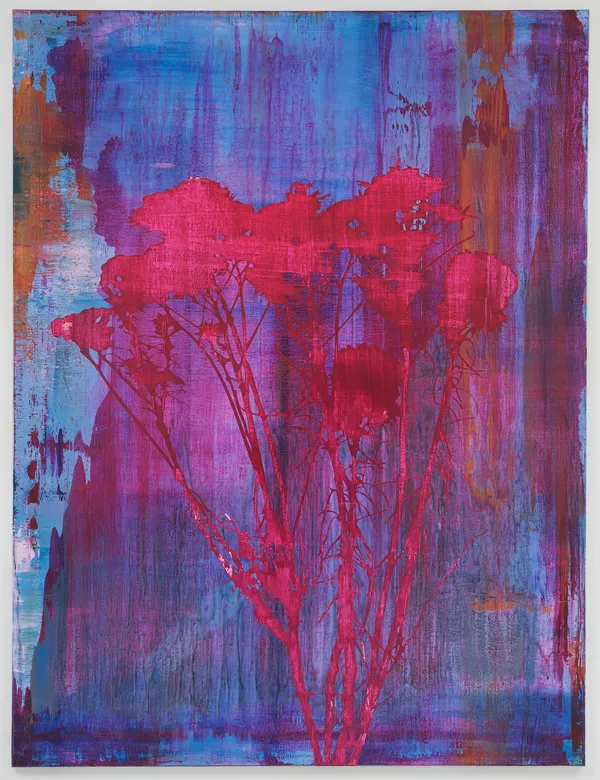
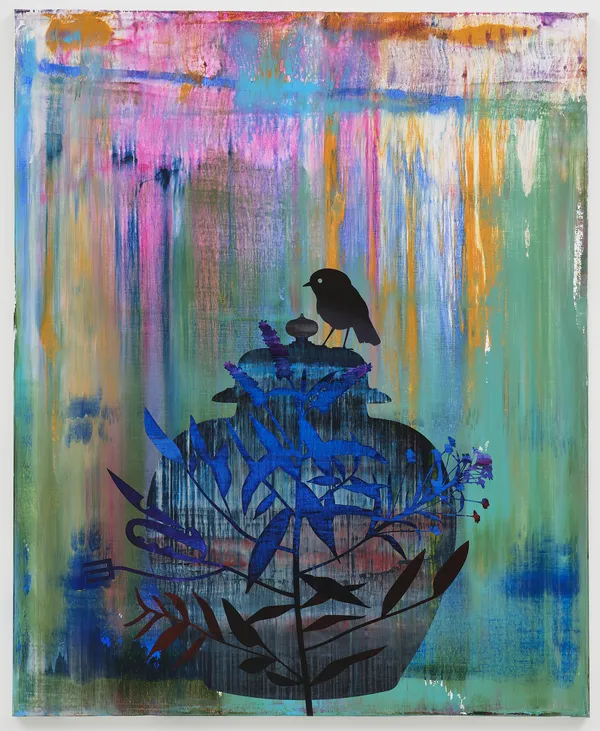
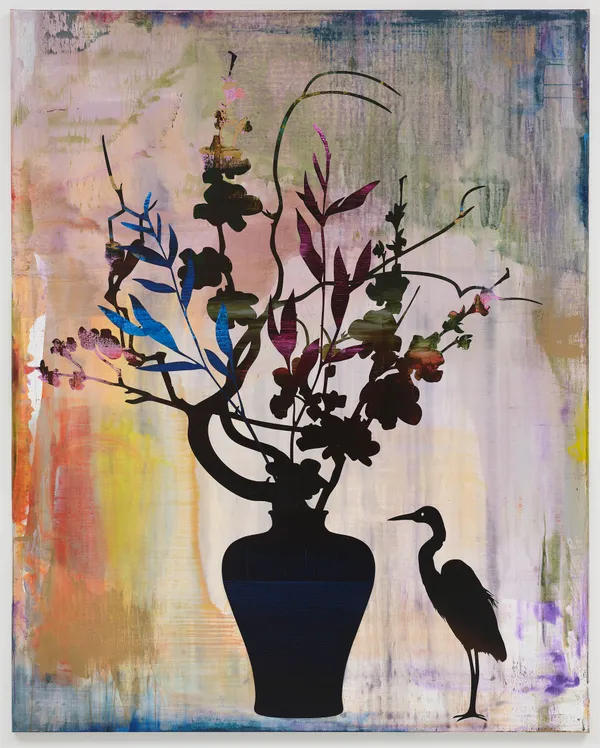
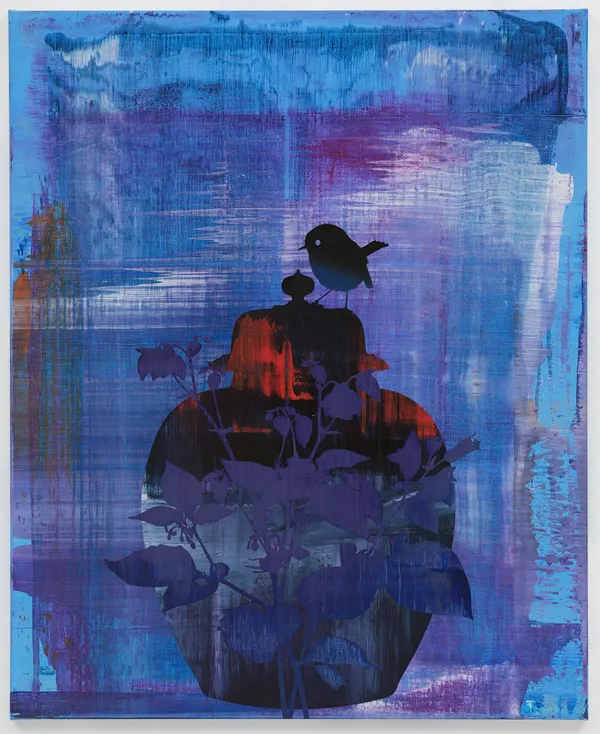
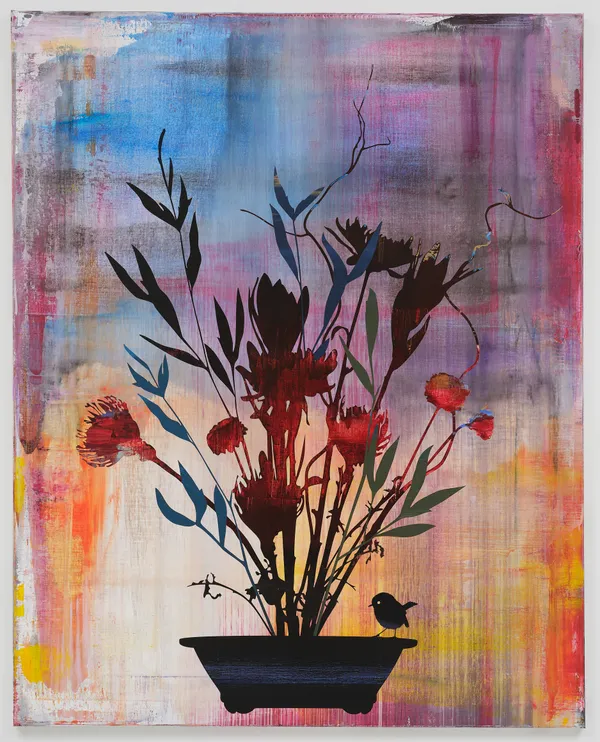
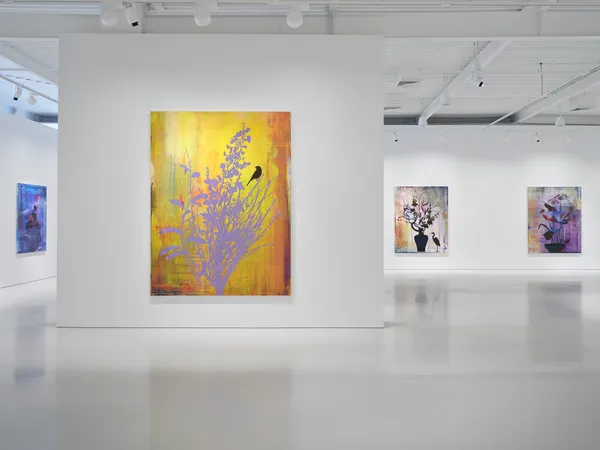
In this body of work, we see the introduction of foliage in silhouette – predominantly introduced species – such as gorse, hemlock, roses, chrysanthemums and magnolias. Some are placed in reference to Ikebana (the Japanese art of flower arranging) to emphasize simplicity, harmony and a connection to nature. These arrangements are often inhabited by silhouetted birds, a reminder of the fragility of life. Drawing from personal observation, Heaphy is interested in how things exist together and side by side. In representing the natural world, he creates metaphors for how things coexist in culture and society.
In combination with this is an interest in the materiality of the painted surface. In sweeps and pulls Heaphy embraces experimentation and moments of chance. Collisions of colour, line and plane emerge from what Heaphy describes as a ‘fascination with the flat painted surface.’ At times singular, at times overlaid, the silhouette becomes a means to explore the effects of colour on colour and the dramatic power it can have to define form, create texture and conjure emotion.
There are echoes of collision and juxtaposition that sound throughout the exhibition, both in materiality and form. In silhouette, we might distinguish a swallow perched on a crop of introduced thistle or broom; a sparrow, perched on a ginger jar; or a robin sitting high on a sprig of gorse. Native and introduced species mix and co-exist. Within this landscape Heaphy’s birds feel at home, they are at ease with their surroundings. There is something inclusive about this outlook, a quiet, recurring positivity that hums through Heaphy’s work, supported by titles such as These Are the Days to Remember and Feels Like You Belong.
